
UK NFL Mobile Betting: Top Rated Sportsbook Apps
 Available in US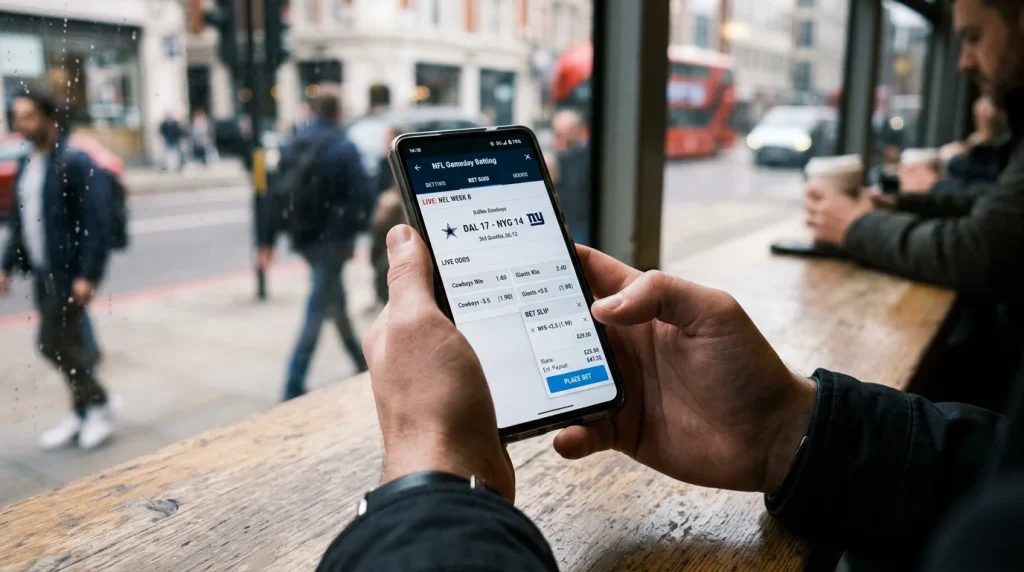
NFL Mobile Betting Apps: Placement Speed and UK Features
I placed my first NFL mobile bet in 2016, sitting on a train between Paddington and Reading. The app crashed twice before I got the wager through, the odds refreshed mid-placement, and I ended up with a slightly worse price than I had intended. Nine years later, I place 95% of my NFL bets on a phone, and the experience has improved beyond recognition. But the gap between a good mobile sportsbook and a bad one remains enormous — and most punters never bother to evaluate the difference.
76% of UK adults aged 18 to 24 use mobile phones for betting, and 95% of all UK online gambling happens from home. Those numbers tell you that mobile is not an alternative to desktop — it is the primary platform. The desktop experience still matters for pre-match research and bankroll management, but the moment of bet placement is overwhelmingly a mobile moment, particularly for NFL games that kick off in the evening when you are on the sofa rather than at a desk.
Key App Features for NFL Betting
The UK online betting market generated $7,371.5 million in revenue in 2024, with online channels accounting for 78.47% of total market activity. That dominance means operators invest heavily in their mobile platforms, but the feature priorities differ between operators — and between sports. Here is what matters specifically for NFL betting.
Market navigation speed is the most important feature and the hardest to evaluate from a screenshot. NFL offers hundreds of markets per game — spread, moneyline, total, player props, team props, quarters, halves, and same game parlays. If navigating from the main NFL page to a specific player prop takes more than three taps, the app is wasting your time. The best NFL betting apps organise markets by category with collapsible menus, letting you reach any market within two seconds.
Bet slip functionality separates the competent apps from the excellent ones. A good bet slip shows your potential return, allows easy stake entry, and confirms your bet with a single tap. A great bet slip also shows the current odds in real time (highlighting any movement since you added the selection), offers a “keep bet” option when odds change rather than cancelling the slip entirely, and supports quick switching between singles and accumulator formats.
Cash-out and partial cash-out features are essential for NFL in-play betting. A game can shift dramatically between quarters, and having the option to lock in profit or cut losses without waiting for the final whistle gives you control that pre-match-only betting does not. Check whether the cash-out function works reliably during peak NFL betting windows — some apps experience lag during high-traffic periods that can delay or prevent cash-out execution.
Bet builder (same game parlay) integration on mobile is a relatively recent development, and the quality varies dramatically. The best implementations let you build an SGP with intuitive selection and real-time odds calculation. The worst require multiple page loads, recalculate slowly, and occasionally reject combinations without clear explanation. If same game parlays are part of your NFL strategy, test the bet builder on each app before the season starts.
Speed, Stability and UX: What to Test Before Kick-Off
The difference between placing a bet at 1.95 and placing it at 1.88 — a seven-tick price deterioration caused by a slow app — is the kind of friction that costs you money over a full season. Over 100 bets at two-unit stakes, that seven-tick difference adds up to roughly three units of lost value. That is not trivial.
I test three things on every sportsbook app before committing to it for an NFL season. First, load time: how quickly does the NFL section populate with current markets after opening the app? Anything over five seconds is a problem, particularly during the Sunday window when you might need to react quickly to a line movement or injury announcement. Second, in-play responsiveness: during a live game, how quickly do the odds update, and how reliably does the bet slip accept wagers at the displayed price? I run this test during a preseason game or a Week 1 fixture, placing small bets to evaluate the speed before committing real volume. Third, crash frequency: apps that crash or freeze during peak periods are useless for in-play betting. A single crash at the wrong moment — when you are trying to cash out a winning position or place a live bet after a key play — can cost more than the entire season’s worth of marginal features.
Battery consumption is an underrated concern. NFL games last three-plus hours, and if you are watching a stream on one device while betting on your phone, a power-hungry sportsbook app can drain your battery before the fourth quarter. I keep a portable charger within reach on NFL Sundays — it sounds trivial, but a dead phone in the third quarter of a game where you have live bets is a genuinely stressful experience.
Biometric login (fingerprint or facial recognition) is a small feature that makes a large difference. Typing a password every time you open the app adds seconds of friction that compound across a session. Every major UK sportsbook now supports biometric login, and there is no reason not to enable it.
Push Notifications and Odds Alerts for NFL Markets
The UK processes over 290 million online sports bets per month, and push notifications are one of the primary tools operators use to drive that volume. For NFL bettors, notifications can be genuinely useful or relentlessly annoying, depending on how you configure them.
Useful notifications: odds movement alerts on specific games or markets you are tracking, cash-out value updates on open bets, and kick-off reminders for games you have pre-match bets on. These save you from constantly refreshing the app and let you act on time-sensitive information.
Useless (and potentially harmful) notifications: promotional push messages urging you to bet on a random game, “boosted odds” alerts designed to create urgency, and daily login prompts. These are marketing tools, not analytical aids, and they actively encourage impulsive betting behaviour. I disable all promotional notifications and keep only odds alerts and bet-settlement notifications active.
Custom odds alerts are the most powerful notification feature for NFL betting. If you identify a spread you want to bet but only at a specific price — say, Bills -3 instead of the current Bills -3.5 — setting an alert for when the line hits your target saves you from monitoring the market manually. Some apps offer this as a standard feature; others require you to “favourite” a selection and then manually check for movement. The apps that let you set a specific price trigger are meaningfully better for strategic NFL betting.
One final consideration: notification fatigue is real, and it can subtly encourage over-betting. If your phone buzzes every time an NFL market moves, you feel compelled to act on information even when the correct response is to do nothing. Curate your notification settings ruthlessly. The goal is to be informed about the specific markets you are tracking, not to be bombarded with prompts to bet on everything. For a broader evaluation of the operators behind these apps, the NFL betting sites guide covers licensing, market depth, and odds quality beyond just the mobile experience.
Do UK sportsbook apps support NFL live betting notifications?
Most major UK sportsbook apps support push notifications for NFL live betting, including score updates, odds movement alerts, and cash-out value changes on open bets. The level of customisation varies — some apps let you set specific price triggers for alerts, while others only offer generic match notifications. Configure your settings to receive only relevant alerts and disable promotional notifications to avoid betting fatigue.
Is NFL betting on mobile as fast as desktop at UK operators?
Modern sportsbook apps are generally comparable to desktop in terms of bet placement speed, and some are faster due to optimised mobile interfaces. The main differences arise during peak traffic periods — the Sunday early window and playoff games — when mobile apps can experience lag that desktop platforms handle more smoothly. In-play odds refresh rates are typically identical across both platforms, but the smaller mobile screen can make navigating complex NFL markets slightly slower.
Articles
Prepared by the American Football Betting Online editorial staff.
