
UK Gambling Regulation: NFL Betting Limits and Licensing
 Available in US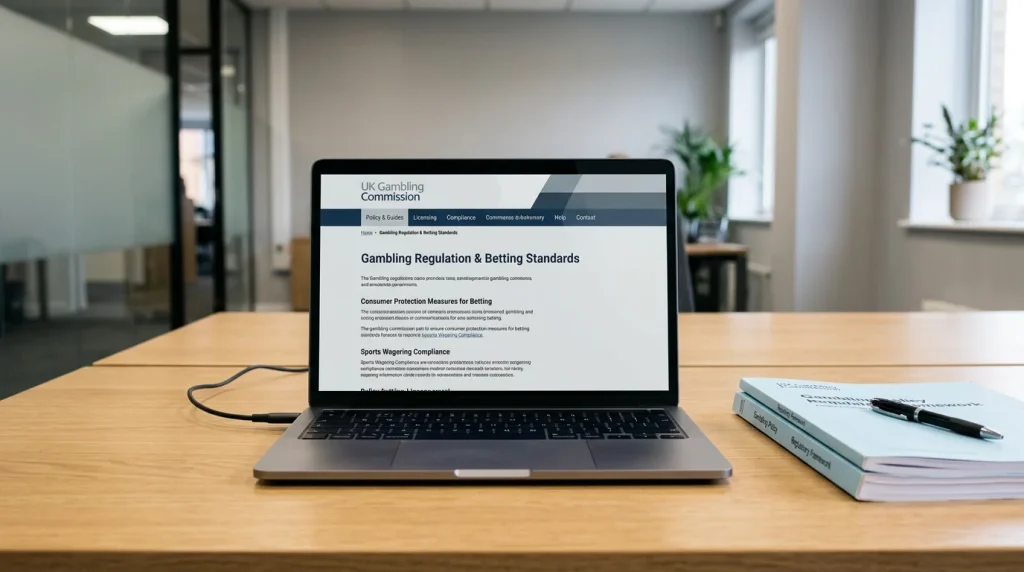
NFL Betting Regulation: UK Sportsbook Licensing and Operator Rules
I remember the exact moment I understood why regulation matters to bettors. A sportsbook I had used for two years suddenly restricted my account with no explanation, no appeal, and no recourse. The funds were returned, but the experience left me feeling exposed. It was the UK Gambling Commission’s complaint process — slow, imperfect, but real — that eventually resolved the issue. Without a regulator, I would have had nowhere to turn.
The UK had 3,086 licensed gambling operators as of March 2025, down 2.3% from the prior year. That contraction is not a sign of a shrinking market — it reflects consolidation and tighter regulatory standards pushing smaller, less compliant operators out. For NFL bettors, this consolidation is broadly positive: the remaining operators are better capitalised, more closely monitored, and less likely to fold or engage in practices that harm customers.
2025 Reforms: Statutory Levy, Stake Limits and Affordability Checks
Clifford Chance’s legal analysis described the 2025 reforms as a decisive shift in UK gambling regulation, positioning the country as a global leader in responsible gambling. That assessment is not hyperbole. The changes introduced in April 2025 represent the most significant overhaul of UK gambling law since the 2005 Gambling Act.
The statutory gambling levy, effective from April 2025, requires licensed operators to pay a mandatory percentage of their gross gambling yield toward research, prevention, and treatment of gambling-related harm. This replaced the previous voluntary system, where operators chose how much to contribute. The levy ensures consistent funding regardless of individual operator goodwill, and it signals that the government views gambling harm as a public health responsibility rather than an industry courtesy.
Stake limits on online slots — five pounds per spin for over-25s and two pounds per spin for 18-to-24-year-olds — were also implemented from April 2025. These limits do not directly affect NFL betting, but they establish a regulatory precedent for product-specific spending controls. The Gambling Commission has indicated that further interventions may follow if data shows similar harm patterns in other product categories, including sports betting.
Affordability checks have been the most controversial element of the reform package. Operators are increasingly required to verify that customers can afford their gambling activity, particularly when spending exceeds certain thresholds. For NFL bettors, this might manifest as requests for income documentation if your deposit or loss patterns trigger the operator’s affordability framework. The thresholds and processes vary between operators, and the system remains imperfect — but the direction of travel is clear.
How Operator Licensing Protects UK NFL Bettors
Paddy Power Betfair was fined two million pounds in 2025 for social responsibility failures, and AG Communications paid 1.4 million. These penalties are not anomalies — the Gambling Commission issues fines regularly, and the amounts have been increasing. The regulatory pressure means that licensed operators have strong financial incentives to comply with player protection standards.
A UKGC licence guarantees several things that unlicensed offshore operators cannot. Your funds are held in segregated accounts, protected if the operator becomes insolvent. Dispute resolution is available through the Commission’s approved alternative dispute resolution providers. Your personal data is handled under UK GDPR standards. And the games and markets you bet on are audited for fairness.
Verification is straightforward: enter the operator’s name on the Gambling Commission’s public register, accessible through their website. The register shows the licence holder’s name, licence number, operating status, and any regulatory actions or conditions. If an operator is not on the register, they are not licensed to offer gambling services to UK residents, and you should not give them your money.
One nuance worth understanding: some operators hold remote gambling licences issued by other jurisdictions (Gibraltar, Malta, Isle of Man) but also hold UK licences. The UK licence is what matters for your protection. An operator with a Maltese licence but no UK licence cannot legally accept bets from UK residents, even if their website is accessible from a UK IP address.
The enforcement side of licensing has teeth. The Gambling Commission conducts regular compliance assessments, and operators who fail to meet anti-money-laundering, responsible gambling, or customer verification standards face financial penalties, licence conditions, or outright revocation. The trend in recent years has been toward larger fines and more frequent enforcement action, which creates a genuine deterrent against non-compliance. For you as a bettor, this means the operator displaying a valid UKGC licence number at the bottom of their website has been actively examined by a regulator with the power to shut them down.
What Regulatory Changes Mean for Your NFL Betting Experience
The total GGY of the UK gambling industry reached 16.8 billion pounds in the financial year to March 2025, a 7.3% increase year on year. That growth tells you the industry is healthy despite — or perhaps because of — tighter regulation. Operators are adapting rather than retreating.
For you as an NFL bettor, the practical impacts are manageable. Enhanced affordability checks may occasionally slow your deposit or withdrawal process. Mandatory responsible gambling messaging will appear more frequently in your betting experience. And some promotional offers may become less generous as operators redirect marketing budgets toward levy contributions and compliance costs.
On the positive side, the regulatory environment creates a floor of quality that offshore unregulated markets cannot match. Your funds are safer. Your disputes have a resolution pathway. And the operators serving you are incentivised to behave responsibly because the cost of non-compliance is real and growing.
My advice: embrace the regulation rather than resenting it. Set your deposit limits, verify your operator’s licence, and use the cooling-off tools when you need them. The regulatory infrastructure exists to protect you, and using it proactively is a sign of sophistication, not weakness. For the practical tools and strategies that complement this regulatory framework, the responsible gambling guide covers deposit limits, self-exclusion, and self-assessment in detail.
What happens if a UK sportsbook loses its UKGC licence while I have open NFL bets?
If an operator loses its licence, the Gambling Commission oversees the wind-down process. Customer funds held in segregated accounts should be returned. Open bets may be voided and stakes refunded, though the exact process depends on the circumstances. This is one reason why UKGC licensing matters — the regulatory framework provides a structured process for protecting customers even when an operator fails.
How does the 2025 statutory gambling levy affect NFL betting odds?
The levy requires operators to contribute a percentage of gross gambling yield to fund gambling harm research, prevention, and treatment. In theory, operators could pass this cost to customers through slightly wider margins on odds. In practice, competitive pressure in the UK market means the impact on individual bet pricing is minimal — operators absorb most of the cost rather than risk losing customers to competitors with tighter odds.
Articles
Written by the editors at American Football Betting Online.
