
UK NFL Playoff Betting: Postseason Odds and Strategy
 Available in US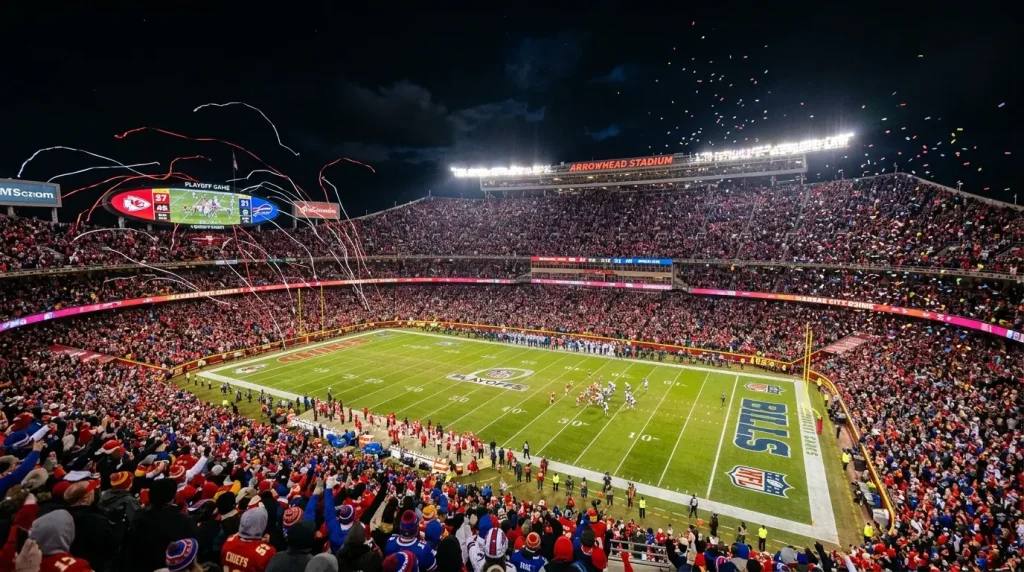
NFL Postseason Markets: Tight Lines and Playoff Betting Value
My worst betting week of 2024 was the divisional round of the playoffs. I went 0-4 against the spread. Four games, four losses, maximum damage. What made it sting was not the money — it was the process. I had applied the same framework that produced a 56% ATS rate during the regular season, and it failed completely. The playoffs are a different game, and I had not adjusted.
The estimated $30 billion in legal NFL wagers during the 2025 season peaked during the postseason, when public interest reaches its maximum and every remaining game is nationally televised. Sportsbooks respond to that surge in volume by tightening their lines, assigning their sharpest traders to each game, and adjusting their models for the specific dynamics of single-elimination football. If you bring a regular-season approach to playoff betting without modification, you are walking into a sharper market with a duller tool.
Tighter Lines: How Sportsbooks Sharpen Playoff Odds
The projected $1.76 billion in legal wagers on Super Bowl LX tells you everything about the scale of playoff betting. That volume — concentrated on fewer games, with more public attention and media coverage — creates the most efficiently priced markets of the NFL season.
During the regular season, sportsbooks spread their resources across 13 to 16 games per week. Each game gets a certain allocation of modelling attention, trader oversight, and line-management resources. During the playoffs, those same resources concentrate on four games (Wild Card), four games (Divisional), two games (Conference Championships), and one game (Super Bowl). The result is lines that are sharper from the moment they open and that move more precisely in response to information.
The practical impact for bettors: the edges that exist during the regular season — stale lines, slow reactions to injury news, underpriced situational factors — are smaller or absent in the playoffs. You need a larger analytical advantage to overcome the tighter market, which means betting fewer games and being more selective about which playoff spots you attack.
I typically bet two or three of the four Wild Card games, one or two of the four Divisional games, and only bet the Conference Championships or Super Bowl when I have a specific analytical edge that the market has not priced. Some years, I sit out the Conference Championship round entirely because the lines are too sharp and my edge is too thin.
Home-Field Advantage and Bye-Week Value in the Playoffs
NFL viewership averaged 18.7 million per regular-season game in 2025, but playoff viewership is significantly higher — and so is the intensity of home-field advantage. Playoff crowds are louder, more invested, and more hostile to visitors than regular-season crowds, because every fan in the stadium knows the season ends with a loss.
Home-field advantage in the regular season is worth roughly 2.5 to 3 points on the spread. In the playoffs, the value is at least that and possibly slightly higher, particularly in outdoor cold-weather stadiums where the home team is acclimatised and the visitor is not. Sportsbooks price this into the line, but the adjustment is based on average home-field advantage — specific venues with extreme environments (Lambeau Field in January, Arrowhead Stadium with a capacity crowd) may warrant a larger adjustment than the line reflects.
The first-round bye, awarded to the top seed in each conference, is a significant advantage that goes beyond simple rest. The bye-week team has two weeks to prepare while its potential opponents play a Wild Card game and have only six days before the Divisional round. The preparation gap is larger than a regular-season bye because both the time differential and the stakes are higher.
Top seeds hosting Divisional round games after a bye have historically performed well against the spread, but the edge has compressed in recent seasons as sportsbooks have adjusted their models to account for the bye advantage more precisely. The remaining value tends to show up when the top seed faces a Wild Card team that played a physically demanding game the previous week — particularly one that went to overtime or featured an unusually high number of plays.
Single-Elimination Dynamics and Variance
Bill Miller of the American Gaming Association has noted how the Super Bowl brings fans together like no other event, with record betting figures demonstrating how Americans enjoy sports betting as part of the experience. That enthusiasm drives enormous volume into playoff betting, but it also obscures a fundamental truth: single-elimination football is inherently more random than a 17-game regular season.
In the regular season, a 12-5 team’s record reflects a large sample of performances. In the playoffs, that team is one bad quarter away from elimination. A turnover on their own 20-yard line, a missed field goal, a questionable officiating call — any single play can swing the outcome. This volatility means that even the best team does not win the Super Bowl most years. The best team over a 17-game season wins the Super Bowl roughly 20-25% of the time, which means 75-80% of the time, somebody else wins.
For bettors, this variance has practical implications. Spread bets in the playoffs carry higher risk than during the regular season because the outcome distribution is wider. A three-point favourite in a regular-season game covers at roughly the same rate as the market implies. A three-point favourite in a playoff game may cover at a slightly lower rate because the intensity and preparation of the underdog narrows the effective gap between teams.
My adjustment: I reduce my standard unit size by 25% for playoff betting. The market is sharper, the variance is higher, and the sample size over any single postseason is tiny — at most eleven games from Wild Card to Super Bowl. Smaller stakes protect the bankroll through the inevitable losing bets while still allowing me to profit from the spots where I have genuine conviction. For the ultimate playoff betting event, the Super Bowl betting guide covers every market, prop, and strategy specific to the final game of the season.
Are NFL playoff spreads tighter than regular season lines?
Yes, playoff spreads tend to be smaller than regular-season spreads because the remaining teams are the league"s best, which compresses the talent gap. The lines are also more efficiently priced because sportsbooks concentrate their best resources on fewer games and the volume of sharp action is higher. Finding value against playoff spreads requires a larger analytical edge than during the regular season.
How does the bye week affect NFL playoff betting?
The top seed in each conference receives a first-round bye, giving them two weeks to prepare while potential opponents play a Wild Card game on just six days" rest. This creates a preparation and rest advantage that sportsbooks price into the Divisional round line. The bye is most valuable when the rested team faces an opponent coming off a physically demanding Wild Card game, particularly one that went to overtime or featured a high play count.
Articles
Created by the "American Football Betting Online" editorial team.
